
Creating a productive home office environment is essential for anyone working remotely or running their own business from home. Whether you have a dedicated room or just a corner in your living space, making thoughtful choices can enhance your focus, comfort, and efficiency throughout the workday.
In this article, we will explore practical tips for setting up and maintaining a productive home office that supports your best work.
Choose the Right Location
Find a Dedicated Space
If possible, select a spot in your home specifically for work. A dedicated area helps create a mental boundary between your professional and personal life, allowing you to switch into work mode more easily.
Consider Natural Light
Natural daylight boosts mood and concentration, so try to set up near a window. Avoid glare on your computer screen by positioning your desk appropriately.
Invest in Comfortable and Functional Furniture
Ergonomic Chair and Desk
A good ergonomic chair supports your back and encourages good posture, reducing the risk of discomfort or injury from long hours of sitting. Choose a desk size that fits your work needs without cluttering the space.
Organised Desk Layout
Keep your desk organised with essential tools within reach. Use desk organisers or trays to reduce clutter and create an inviting workspace.
Optimise Lighting
Use a Combination of Lighting
In addition to natural light, ensure you have good-quality ambient lighting and a task light for detailed work. Adjustable lamps help reduce eye strain.
Avoid Harsh or Flickering Lights
Bright, harsh lighting or flickering bulbs can cause headaches and fatigue. Opt for soft, steady illumination.
Minimise Distractions
Set Clear Boundaries
Communicate your work hours to others in your household to minimise interruptions. Use noise-cancelling headphones if needed to block background noise.
Keep Technology Organised
Avoid unnecessary notifications by silencing your phone or using productivity apps to stay focused. Use cables and chargers organised with clips or boxes to prevent tangles.
Personalise Your Space
Add Inspirational Elements
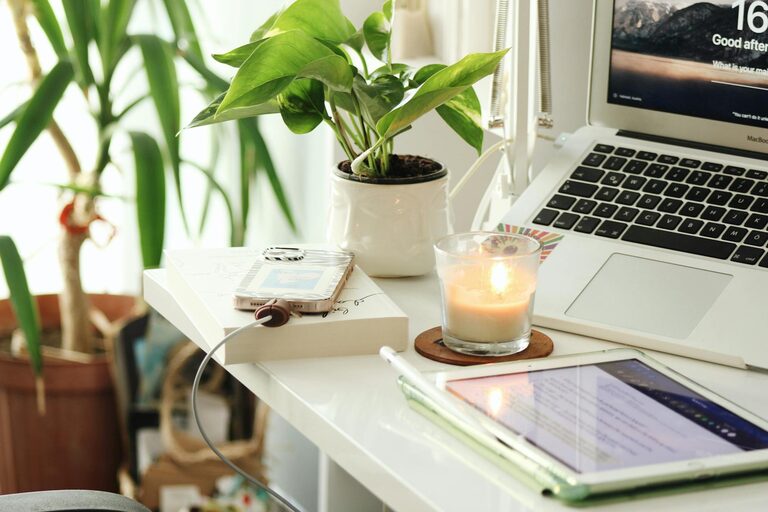
Personal touches like photos, plants, or artwork can make the space motivating and comfortable. Greenery, such as houseplants, can improve air quality and reduce stress.
Maintain a Clean Environment
Regularly tidy your workspace to keep it inviting and functional. A clean environment can improve concentration and reduce anxiety.
Set a Routine
Establish Work Habits
Start your workday at a consistent time and take regular breaks to refresh your mind. Techniques such as the Pomodoro Technique—working in focused intervals followed by short breaks—can improve productivity.
Separate Work and Leisure
At the end of the day, close your laptop and leave your workspace if possible. This helps establish a healthy work-life balance.
Use Technology Wisely
Reliable Internet and Devices
Ensure you have a stable internet connection and up-to-date devices for seamless communication and work efficiency.
Utilise Productivity Tools
Apps for task management, calendar scheduling, and note-taking can help organise your workflow and deadlines.
Maintain Your Health
Incorporate Movement
Regularly stand up, stretch or move around to reduce stiffness and improve circulation. A sit-stand desk could be an option if space and budget allow.
Create a Comfortable Temperature
Adjust heating or ventilation to maintain a comfortable room temperature during work hours.
—
Creating a productive home office environment takes some planning and investment, but the benefits to your work quality and wellbeing are significant. By choosing the right location, investing in comfort, minimising distractions, and fostering a positive atmosphere, you can make your home office a place where you thrive professionally.